Minstrel Shows
Minstrel began in the 1830s and peaked in the late nineteenth century, although it lasted well into the twentieth century. As radios and talking movies began to dominant entertainment, professional minstrel shows tapered off. However, according to the Jim Crow Museum, minstrel remained popular throughout the early to mid-twentieth century with local theater groups, schools, churches and other amateur groups.
Minstrel was a form of vaudeville. Vaudeville consisted of a variety of acts, often times unrelated, and typically included dramatic and comedy sketches and various songs. Minstrel relied heavily on comedic sketches and exaggerated ethnic dances and songs for the purpose of ridicule. Additionally, there was heavy emphasis on characters who were sly, lazy, dimwitted, and the “happy slave” trope.
“Blackface” is a characteristic of minstrels. White performers used grease paint or other makeup to darken their skin and then used white or red makeup to exaggerate their lips. Raggedy clothes, wooly wigs, and accents were all used to caricature – or ridicule with negative stereotypes – Black people.
Some African Americans also performed minstrel, including the use of makeup to exaggerate features. “Blackening up” remained popular and normalized so much so that many famous Hollywood performers participated including Bing Crosby, Fred Astaire, Judy Garland, Ronald Reagan, and Bugs Bunny.
This was family entertainment. Demonstrating how minstrel shifted to local amateur groups, Dow Chemical’s Music Department performed Darktown Jamboree in 1949 and again in 1959.
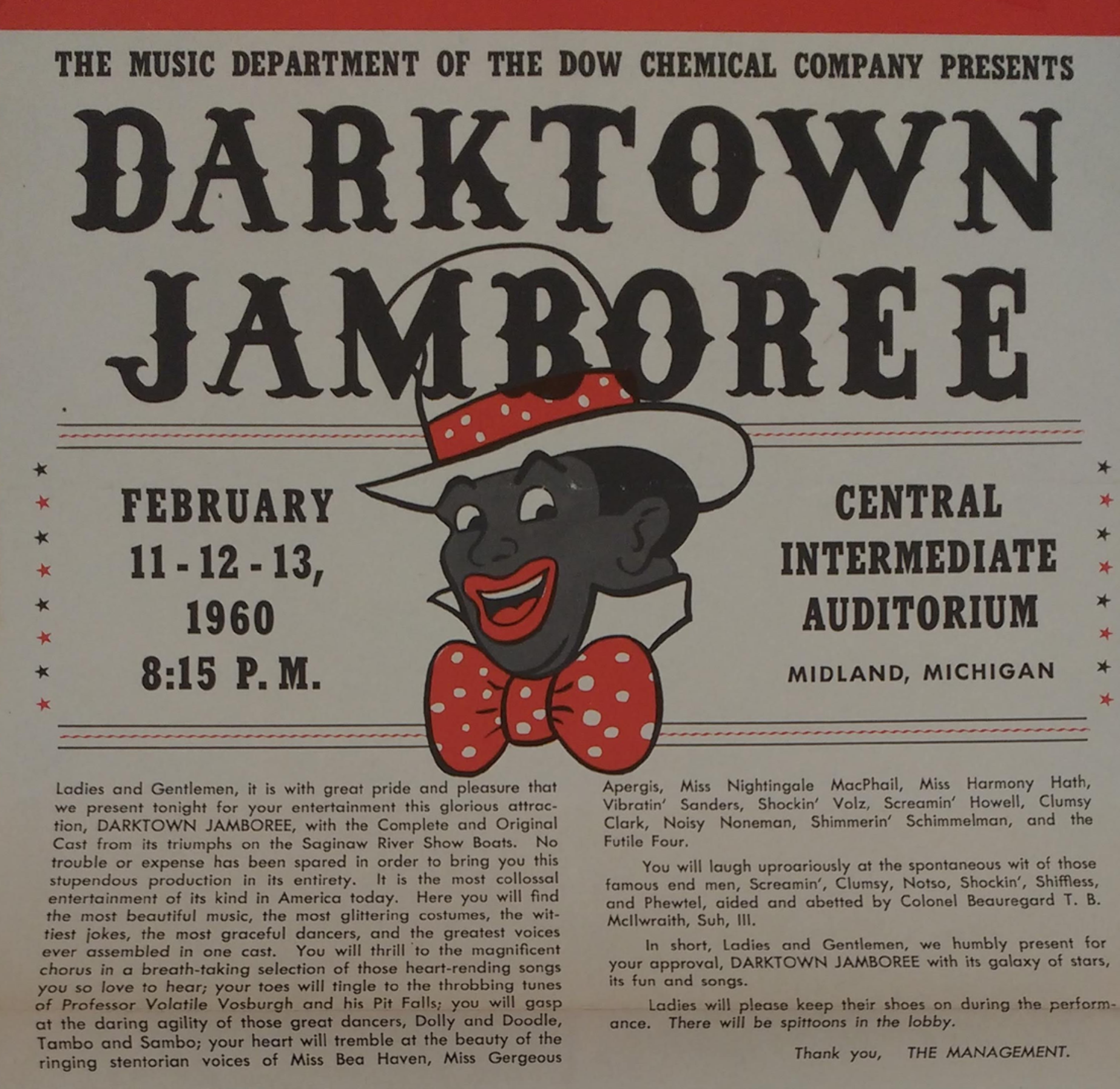
AD FOR DARKTOWN JAMBOREE PERFORMED BY THE DOW CHEMICAL COMPANY
